Work-for-Hire

A screenwriter is hired for a negotiated fee to write or rewrite a script within a certain timeframe. The writer is guaranteed of payment if he/she fulfills the terms of the contract (and the employer honors the contract).

A work-for-hire generally consists of steps in which the writer receives a payment for each portion of the script that is delivered on schedule. Steps might include the beat sheet, treatment, first draft, producer’s draft, polish draft, etc.

Unfortunately, it is becoming more commonplace for studios to use “one step deals” in which the writer gets only one payment for one pass then is often asked to do extra drafts for free (usually to incorporate notes from the studio, the producer or talent). (also see Packaging a script) The WGA is trying to crack down on these abuses.

Work-for-Hire is generally only for experienced writers. A newcomer must be known for at least one quality spec script before being considered for work-for-hire jobs (see Spec Script).

A Work-for-Hire is also known as a writing assignment. The screenwriter is writing “on assignment” (with employer) as opposed to “on spec” (on their own).

Unsolicited Submission

An Unsolicited Submission is a screenplay submission that is not coming from a professional source (an agent, lawyer, or manager). Many production companies and studios refuse to read unsolicited submissions, but they all keep a Submission Release Form on hand for when they get tempted by a new writer with a fantastic logline.

Keep in mind that many agencies and management companies also employ a “No Unsolicited Submissions” rule, so you need an agent to get an agent!  The way around this is to network and meet repped writers so they will give you a referral to their agent or manager.

The common wisdom is that managers are more likely to read material from new writers than agents but it is my experience that they can be just as tough to get to. The first step is to win over their assistant and get them to accept your submission.

Treatment

The plot of a screenplay written out in prose form, generally in one to two pages. The story, specifically the action of the story; beginning, middle, and end; very clearly written and meticulously proofread.

The treatment should be very spare and straightforward — it should not contain extraneous emotional or cerebral content nor long excerpts of dialogue. I feel that it is crucial for a screenwriter to write a treatment of their story before they begin writing the actual script to see how it works on the page and how it is balanced to the four act structure, and then also after they’re finished to help market it. Many companies will require a one page treatment sent ahead of time for review before they accept the screenplay.

Also called a synopsis or pitch; not to be confused with a long-form 25 page treatment, or even longer scriptment (a phrase popularized by James Cameron) which includes blocked excerpts of dialogue and can be written moreso in a hybrid screenplay format.

It should also be noted that it is extremely difficult for unestablished writers to sell just a treatment without the accompanying screenplay. Employers want to see your unique concept executed on the screenplay page in your voice before they’ll buy just the idea and general structure in treatment form.

Three Act Structure

Three Act Structure (a.k.a standard structure) is the classical, proven form of storytelling in film. Form, not formula. It does not dictate your story choices, only where you might place the major plot points.

This structure is based on Aristotle’s three act dramatic structure: beginning, middle, and end. Also known as Three Act Restorative Structure, as the story begins with an order that is thrown into chaos, and by the end a new restoration of order is reached.

My estimate is that 95% of modern movies fit into a three-act structure, including most foreign films and seemingly more experimental cinema such as Paranormal Activity, Borat, Being John Malkovich or The Blair Witch Project.

Personally, I break the three acts into four, separating act two into 2A and 2B.

Submission Release Form

A waiver provided by a production company and signed by an un-repped writer who is making an unsolicited submission (see Unsolicited Submission). Protects the production company in the event they produce a film featuring a similar story as the writer’s screenplay and it produces a paper trail for the writer as a record of the submission.

The Submission Release Form is the way around the “no unsolicited submissions” rule if a production company really wants to read your script.

Story Analyst

Also known as a “Reader.” The person who reads a written submission (usually a screenplay or a novel) for a producer or executive and writes up an evaluation report called coverage. Since producers and executives can’t possibly read every submission that comes through the door, they employ story analysts to sift through most of it, and the exec only reads what gets screened and/or what is dubbed high-priority.

Spec Script

A spec script is a screenplay written to be sold on the open market, as opposed to one commissioned by a studio or production company (see Work-for-Hire). No guarantee of payment. The greater risk of a spec script can pay off in a bigger sale.

The only way for a new screenwriter to break in is to have a strong spec screenplay that will establish them by being an impressive writing sample or their first sale.

Shooting Script

The final draft of a screenplay before going into production. Has been given the final okay by the Director, the Producers and Executives and contains scene numbers and possibly camera cues and other visual references.

As a spec screenwriter, you should not be concerned with shooting scripts or formatting your script to look like one.  Keep in mind that many of the produced screenplays you see posted online are shooting scripts, not submission drafts (see Reader’s Script) so you should not necessarily emulate the style and format of these drafts. Many shooting scripts also tend to be much longer than your average spec screenplay, which should be around 110 pages.

Registering your script/book

All screenplays and written material should be registered with the Writer’s Guild of America West or East before submitting to anyone or any professional entity. Your work (anything written may be registered) will be sealed in an envelope (or digitally archived) and date stamped. For non-members, this service currently costs $20 in L.A. (five years registration) and $22 in NY (10 years registration). It may be done online, via mail or in person at the offices in New York or Los Angeles. You should also copyright your work (see Copyright). Titles cannot be protected.

Readers Script

The submission draft. A screenplay written to be submitted to a production company. Should read well and flow; should not contain scene numbers or visual directions. A Reader’s script should feature a dynamic opening, short scenes, fast pacing and never exceed 120 pages in length (see Shooting Script).  I suggest you keep it under 110 pages. HERE is more about what I like to see in a great script.

A great screenplay query letter – my thoughts

I always suggest opening with a compliment — the “kill ’em with kindness” approach — that way you don’t just sound like you want something from them but you’re here to contribute something to their obviously stellar output. Plus, everyone likes a little ego stroke, especially in Hollywood.

Open the letter by congratulating them on the success of their latest film and tell them how much you love one of their smaller, critically-acclaimed films. They will appreciate you noticing one of their lesser-known, more artistic efforts. I also suggest doing some research and pointing out an obscure fact about them and their work that could only have been known by someone who took the time to do their homework.

Read more

Query Letter

A short letter to a professional company, via email, mail or fax, making them aware of you and your screenplay and “pitching” the story to them in the hopes they’ll request it. Three to five short paragraphs and one page maximum — must be very clear and meticulously proofread. Must include your logline: one sentence, 20-30 words.

HERE is an article with more detail about my approach to query letters.

Packaging a script

Attaching talent to your screenplay. I.e., getting an actor and/or a director to officially declare interest in the script to raise the chances of a sale and production. This is very difficult to do without representation (see Unsolicited Submission), and even more so to attach a “star” as their agents will refuse to look at a script not already funded for production. This is also referred to as attaching “elements.”

A major agency (like CAA or William Morris-Endeavor) can put together a package that includes their clients in the key roles (director, writers, leading actors) with partial financing and approach a studio for finishing funds and/or a distribution commitment.

A new writer wants to generate “buzz” on their script in some way that might get name talent to consider it. A contest/festival win, a referral from a friend or existing client or even a well-known true-life inspiration can help to build buzz on a script and get it read.

Option/Sale

An Option is when a producer pays for the right to purchase a screenplay in a set period of time, essentially taking it off the market. In that period (e.g., 6 months, 1 year) they have the exclusive right to shop the script around, hoping to get it sold, financed, or produced. Most options to new screenwriters are for small sums of money; in most cases, a new writer should consider the track record of the producer (thus the likelihood of their script being sold and produced) as being more important than the price.

A sale is an outright purchase of a screenplay, but many sales listed in the trades contain the “guarantee/upfront” amount and the production bonus (e.g. $100,000 against $300,000). One sum is paid up front (usually in steps) and the remainder of the money is paid if and when the film either goes into active development or begins production. This is to insure the studio against overpaying for scripts that will just sit on their shelves, since they buy more material than they can actually make into films.

Inktip Pitch Summit

Dear Screenwriters,

I have been an Inktip member for years and I recommend it to every screenwriter I meet, coach or collaborate with. I know several writers who have found success by listing their scripts on Inktip.

In fact, Inktip is the only site outside of my own that I’ve ever endorsed for the simple reason that they have an incredible track record when it comes to getting films made.

I am proud to be selected by Inktip as one of their approved Consultants for the first annual Inktip Pitch Summit.

It’s the only pitch event that I’ve ever been involved with.

Read more

Mad Men’s Vincent Kartheiser on what he looks for in a script

After emerging from my sub-basement cryo-chamber as my alter-ego Telematic Dan, I covered the red carpet premiere of Mad Men Season 4 in Hollywood, CA at the Mann Chinese Theater 6 (in the same complex as the famous Grauman’s Chinese Theatre).

For a round-up of the night, go here.

One moment that stuck out was when I asked actor Vincent Kartheiser (who plays advertising accounts man Peter Campbell on Mad Men) about what he looks for in a screenplay… his first response was…

Read more

The Harsh Truth: Cutting Scenes in your Screenplay

Dear Screenwriter,

you gotta be willing to kill your puppies.

Here’s a quick rule that is deceptively simple, very powerful and utterly crucial. This is a rule none of us can escape. This applies to every scene in your script:

If a SCENE does not:

Read more

Writing Comedy – Interview with Louis C.K.

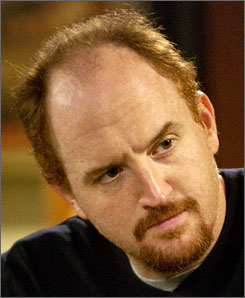
Louis C.K. in FX channel's "Louie"

Louis C.K. in "Louie" on FX

I’ve hired a lot of writers… The more original, the more unique your stuff is, the better, I think, rather than trying to hit a certain place that’s going to get you employed.  That usually just makes you like everybody else.


Continuing my coverage of FX Networks programming, I took part in a conference call interview with comedy veteran Louis C.K. who is premiering his new 30-minute comedy show “Louie” tonight.

Louis had some great insights into comedy writing and, for my money, elucidated the problem with network television and why it’s been getting its ass kicked by cable television for the past decade. Louis C.K.’s credits include Late Night with Conan O’Brien, “TV Funhouse” on Saturday Night Live, Lucky Louie on HBO and the cult hit movie Pootie Tang.

FX NETWORK:  Louie

Premieres June 24, 2010/11:00 p.m. PDT

Dan Calvisi: You are listed as the only writer on IMDB.  I don’t know if I missed some press materials where it lists other writers, but if that’s the case, what exactly is your writing process for writing these episodes?

Louis C.K. I am the only writer.  That was a decision I made because I just wanted to write and make the show.  Writers’ rooms, they kind of gravitate towards a certain place.  There’s a need to perfect things in a writers’ room, and that can take a lot of fun out of a show sometimes.  It’s a struggle.  It depends on your personality.  Some people love working with a writing staff.  I had a great writing staff on Lucky Louie, but it sometimes felt like Congress or something.  It’s like if you’re the president and you have the ability to just fire Congress, life would get kind of fun all of a sudden. Read more

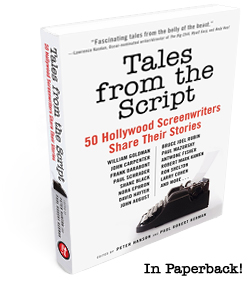
Book Review: Tales from the Script: 50 Hollywood Screenwriters…

A while back, I was sent an advance copy of Tales from the Script: 50 Hollywood Screenwriters Share Their Stories and I can report that is a fantastic book that gives you the inside word from the best, most influential and most legendary screenwriters in the business. If you’re working on your first screenplay, have written 50, or you’re just a movie buff, this is an invaluable glimpse into a segment of the industry that is absolutely CRUCIAL but rarely explored in such detail.

From Mike Binder to Nora Ephron to Steven E. de Souza to John August to Paul Schrader to Mick Garris to Frank Darabont to Larry Cohen to Josh Friedman… there’s bound to be a writer in here that changed YOUR life with their words that were translated into film. So don’t just worship the actors and directors; work a little harder and learn about the scribes that the pretty people need but will never give their due credit.

Read more

Inception featurette continues the legacy of The Dark Knight – WATCH IT!

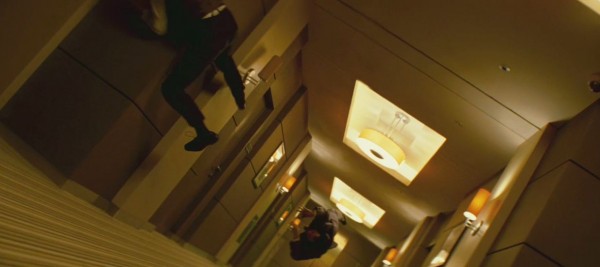
Can you press 3rd floor for me-aaaahhhhhh!

There’s a reason why that anti-gravity hallway effect in Inception looks so amazing.

It’s because that shit is real.

No CGI. It’s a giant rig that rotates 360 degrees and it must have cost a fortune. It’s another example of how and why Christopher Nolan is this generation’s James Cameron.

Like Cameron, Nolan insists on spending millions of the studio’s money on creating real, physical spectacles, sometimes for only a single shot.

This is why those aerial IMAX shots in The Dark Knight looked so amazing; those weren’t sets, they were real skyscrapers in Chicago and Hong Kong.

When we see Batman riding his batpod motorcycle…it’s real. They didn’t just hand off the scene to a bunch of animators.

batpod pic

A team of engineers spent months (and a batload of Warner Brothers’ cash) designing and building a new vehicle that a stuntman could actually drive.


Don't try this at home.

Let’s be clear: they invented a vehicle.  For..one scene?  Yes, for one scene (okay, two and a half scenes, geeks).

Read more