How To Write A Movie Screenplay

Would you like to learn how to write a screenplay from a professional screenwriter and Script Doctor who has worked for major movie studios and is based in Los Angeles, California, Hollywood, the entertainment capital of the world?

I can give you the TOOLS — the professional screenwriting how to — to write a great movie screenplay or television script. My method is called Story Maps Screenwriting and it is the most simple, clear and effective roadmap to take you from your initial concept all the way to a polished draft that you can submit to agents, managers and producers in the movie industry in Hollywood. Read more

How To Screenplay

Would you like to learn how to write a screenplay from a professional screenwriter and Script Doctor who has worked for major movie studios and is based in Los Angeles, California, Hollywood, the entertainment capital of the world?

I can give you the TOOLS — the professional screenwriting how to — to write a great movie screenplay or television script. My method is called Story Maps Screenwriting and it is the most simple, clear and effective roadmap to take you from your initial concept all the way to a polished draft that you can submit to agents, managers and producers in the movie industry in Hollywood. Read more

How To Write A Screenplay Outline

Would you like to learn how to write a screenplay from a professional screenwriter and Script Doctor who has worked for major movie studios and is based in Los Angeles, California, Hollywood, the entertainment capital of the world?

I can give you the TOOLS — the professional screenwriting how to — to write a great movie screenplay or television script. My method is called Story Maps Screenwriting and it is the most simple, clear and effective roadmap to take you from your initial concept all the way to a polished draft that you can submit to agents, managers and producers in the movie industry in Hollywood. Read more

How To Write A Screenplay Script

Would you like to learn how to write a screenplay from a professional screenwriter and Script Doctor who has worked for major movie studios and is based in Los Angeles, California, Hollywood, the entertainment capital of the world?

I can give you the TOOLS — the professional screenwriting how to — to write a great movie screenplay or television script. My method is called Story Maps Screenwriting and it is the most simple, clear and effective roadmap to take you from your initial concept all the way to a polished draft that you can submit to agents, managers and producers in the movie industry in Hollywood. Read more

How To Write A Screenplay

Would you like to learn how to write a screenplay from a working Los Angeles-based Script Doctor with industry experience that includes major movie studios like Miramax and Fox? Is your goal to gain the skills to compete in the top markets in the movie and television industry in Los Angeles, California, Hollywood, the entertainment capital of the world?

I can give you the roadmap and the skills — the professional screenwriting how to — to write a great movie screenplay or television script. My method is called Story Maps Screenwriting and it is the most simple, clear and effective roadmap to take you from your initial concept all the way to a polished draft that you can submit to agents, managers and producers in the movie industry in Hollywood. Read more

How To Write Screenplay

Do you want to learn how to write a screenplay from a professional Script Doctor and screenwriter who has worked for major movie studios and is based in Los Angeles, California, Hollywood, the entertainment capital of the world?

I can give you the CRAFT, the TOOLS and the METHOD — the professional screenwriting how to — to write a great movie screenplay or television script. My method is called Story Maps Screenwriting and it is the most focused, clear and effective roadmap to take you from your initial idea all the way to a polished draft that you can submit to managers, agents and producers in the movie industry in Hollywood. Read more

Learn How To Write A Screenplay

Would you like to learn how to write a screenplay from a professional screenwriter and Script Doctor who has worked for major movie studios and is based in Los Angeles, California, Hollywood, the entertainment capital of the world?

I can give you the TOOLS — the professional screenwriting how to — to write a great movie screenplay or television script. My method is called Story Maps Screenwriting and it is the most simple, clear and effective roadmap to take you from your initial concept all the way to a polished draft that you can submit to agents, managers and producers in the movie industry in Hollywood. Read more

Screenwriting How To

Would you like to learn how to write a screenplay from a professional screenwriter and Script Doctor who has worked for major movie studios and is based in Los Angeles, California, Hollywood, the entertainment capital of the world?

I can give you the TOOLS — the professional screenwriting how to — to write a great movie screenplay or television script. My method is called Story Maps Screenwriting and it is the most simple, clear and effective roadmap to take you from your initial concept all the way to a polished draft that you can submit to agents, managers and producers in the movie industry in Hollywood. Read more

Write Screenplay

Would you like to learn how to write a screenplay from a professional screenwriter and Script Doctor who has worked for major movie studios and is based in Los Angeles, California, Hollywood, the entertainment capital of the world?

I can give you the TOOLS — the professional screenwriting how to — to write a great movie screenplay or television script. My method is called Story Maps Screenwriting and it is the most simple, clear and effective roadmap to take you from your initial concept all the way to a polished draft that you can submit to agents, managers and producers in the movie industry in Hollywood. Read more

How To Write Screenplays

Would you like to learn how to write a screenplay from a professional screenwriter and Script Doctor who has worked for major movie studios and is based in Los Angeles, California, Hollywood, the entertainment capital of the world?

I can give you the TOOLS — the professional screenwriting how to — to write a great movie screenplay or television script. My method is called Story Maps Screenwriting and it is the most simple, clear and effective roadmap to take you from your initial concept all the way to a polished draft that you can submit to agents, managers and producers in the movie industry in Hollywood. Read more

Three Shades Of The Romance Film

BROKEBACK MOUNTAIN (2005)

My take on the success of this film is that it was Casablanca for gay men. It’s a classical period “doomed” romance in a unique milieu that had never been presented in this way, at least not in a wide release with major movie stars. Put simply: its time had come. This was great writing about two people in quiet desperation (actually, four people), one of whom is a man so beset by guilt and fear and held to a code of ethics formed in his youth that he absolutely CANNOT allow himself to be with the person he truly loves the most.

I don’t think the ‘shock factor’ had as much to do with the phenomenon as the press would have had us believe. And for some viewers who didn’t “get it,” they complained that not much happened. But this film is not so much about actions — it focuses on theme, character and inner conflicts. Subtext is a huge factor in this story, and the writers (Larry McMurtry & Diana Ossana adapting Annie Proulx) use it to create great depth from what seems to be a narrow-focus story. Read more

Story Maps #2: The First Trial/ First Casualty!

The First Trial is the first test of the commitment that your protagonist made at the end of Act One when they made that active decision that pushed them and us into the second act. This must be a setback…a failure…thus there is a First Casualty…

Read more

Story Maps: A Quick Introduction

The Story Map breaks down your narrative into its eight main dramatic elements, the four major story engines and the ten crucial story beats that must be in the same order and must fall in specific page points in your screenplay, no matter the genre.

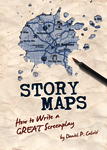
Learn more about Story Maps and buy the new E-Book Story Maps: How to Write a GREAT Screenplay.

Good luck and happy writing!

-Dan

Trilogy Mapping: Star Wars and Lord of the Rings! Dan’s 2-Minute Screenwriting School #5

Not only does each film adhere to the story map structure but there’s an over arcing structure where the trilogy is a story map unto itself as if it were one film.

Read more

Dan’s 2-minute Screenwriting School #3 – THE FIRST TEN PAGES!

The first ten pages of your script must establish the world of your story, set up a compelling conflict with intriguing characters, establish your skills on the page and suck in the reader.

Related: Don’t Suck, Suck in the Reader!

Click to read excerpts

Dan’s 2-Minute Screenwriting School #2 – The Big Idea! Supercharge Your Screenplay!

The Big Idea has replaced the term “high concept”… they essentially mean the same thing.  The big idea is the first and maybe the only thing that will get your script read if you’re a new, unproven writer…the big idea is not just a stringing together of familiar elements from other hit movies, as many newbie writers think.

Screenplay Terminology

If you are looking for common screenwriting terms for the aspiring professional screenwriter…

See my Screenwriting Glossary HERE.

-Daniel Calvisi
https://actfourscreenplays.com/
copyright (c) Daniel Calvisi

Where are you at in the screenwriting process?

No matter if you’re just starting out or have written several scripts, I can help you to achieve your goals.

Good luck and happy writing!

-Dan

Dan’s 2-Minute Screenwriting School #1 – How Your Screenplay Should Look Industry Format Final Draft

Don’t print the title of the script on the card stock cover… it should go on the title page of the script. If you’re using Final Draft…define a title page so you don’t get the generic, default title page.

CALL TO ACTION:

Million Dollar Baby Screenplay

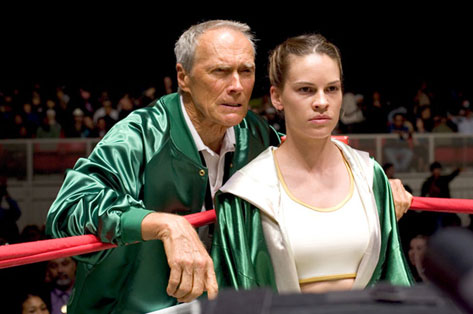
Clint Eastwood and Hilary Swank in Million Dollar Baby

Million Dollar Baby

(2004; Screenplay by Paul Haggis, based on stories by F.X. Toole; Directed by Clint Eastwood)

Million Dollar Baby is an incredibly focused story. Screenwriter Paul Haggis achieves what I call “story cohesion” by making sure that every element logically flows from strong main dramatic elements while generating dramatic conflict.

The first level of focus is on a crucial element in the “Basic” portion of my outline method which is called Story Maps Screewriting: Theme.

The theme of Million Dollar Baby is “second chances.”

Every character is pursuing a second chance and the character construction, goals and plot beats reflect this. This pursuit is most often shown with active devices, i.e. visual devices as opposed to just being “told” in dialogue. A simple example of this would be the letters from Frankie’s estranged daughter, returned to him unopened, which set up his failure as a father in the past that he hopes to make up for when he gets his second chance to father Maggie. But Haggis knows the letters, although an elegant device, are a bit too simplistic on their own so he builds in active scenes to illustrate Frankie’s inner struggle (e.g., Frankie at church, Big Willie leaving him for another trainer, Scrap admonishing him for being too controlling when he was a fighter).

Let’s look first at the two main characters…

FRANKIE DUNN (Clint Eastwood): Second chance as a trainer and father.

  • Past: His daughter rejects his attempts to reconcile (the returned letters, unopened)
  • Present, negative: Big Willie, his number one fighter, leaves him for another trainer.
  • Present, positive: Maggie gives him a second chance as a trainer and father.

MAGGIE FITZGERALD (Hilary Swank): Second chance as a boxer and a daughter.

  • Past: Her father died when she was young.
  • Present, negative: Her mother rejects her gift of a house.
  • Present, positive: Frankie takes her under his wing and pledges to never leave her.

…and at two of the supporting characters…

SCRAP (Morgan Freeman): Second chance at being a boxer, or, retiring from boxing on a win.

  • Past: He was retired early with an eye injury. Wonders if he could have made it. (setup)
  • Present: He defeats Shawrelle (Anthony Mackie) in the ring to defend Danger. (payoff)

DANGER (Jay Baruchel): fulfillment as a real boxer.

  • Present: Danger is a supporting character meant to show contrast and color at the gym.

Danger is the boxer who only has the heart, but not the talent, whereas Shawrelle has the talent but no heart, and Maggie has BOTH.
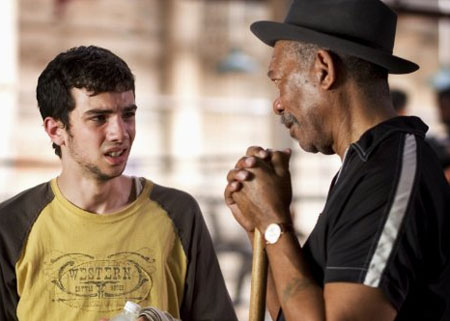

So we see how the other boxers are written so as to highlight what makes Maggie special (again, using active, shown devices for character development and plot progression).

SPOILERS AHEAD — But if you’re serious about screenwriting you’re here to analyze movies not just watch them (nice guilt trip, huh?).

The story pushes Frankie and Maggie to a FINAL DECISION. The catalyst for this final decision is the big beat — the crippling of Maggie — which is initially shocking to any first-time audience member. But it is the perfect method to show how she has truly been fulfilled by her experience with Frankie — she got her second chance at a better life and she was satisfied by it — which forces Frankie to decide between his own selfish needs and the best wishes of his adopted daughter.

Frankie tells Maggie that he has plans for her when she gets out of the hospital. Maggie tells Frankie that she saw the world, she heard people chanting her name, she fought for the title. That’s enough. She is ready to die.

Maggie is a young woman who was left by the only man who ever loved her: her daddy. Frankie is an older man whose daughter left him. They give each other a second chance, the possibility of redemption. In the end, Frankie makes his final decision, the ultimate conflict: to decide to facilitate the death of his most beloved. In essence, to give up his chance at salvation for Maggie. For a man who’s been paying for his past sins for decades, it is this final, most painful act that redeems him as he succeeds at being the best father and trainer he can be.

-Daniel Calvisi
https://actfourscreenplays.com/
copyright (c) Daniel Calvisi

Where are you at in the screenwriting process?

No matter if you’re just starting out or have written several scripts, I can help you to achieve your goals.

Good luck and happy writing!

-Dan

https://actfourscreenplays.com/

Million Dollar Baby Script

Clint Eastwood and Hilary Swank in Million Dollar Baby

Million Dollar Baby

(2004; Screenplay by Paul Haggis, based on stories by F.X. Toole; Directed by Clint Eastwood)

Million Dollar Baby is an incredibly focused story. Screenwriter Paul Haggis achieves what I call “story cohesion” by making sure that every element logically flows from strong main dramatic elements while generating dramatic conflict.

The first level of focus is on a crucial element in the “Basic” portion of my outline method which is called Story Maps Screewriting: Theme.

The theme of Million Dollar Baby is “second chances.”

Every character is pursuing a second chance and the character construction, goals and plot beats reflect this. This pursuit is most often shown with active devices, i.e. visual devices as opposed to just being “told” in dialogue. A simple example of this would be the letters from Frankie’s estranged daughter, returned to him unopened, which set up his failure as a father in the past that he hopes to make up for when he gets his second chance to father Maggie. But Haggis knows the letters, although an elegant device, are a bit too simplistic on their own so he builds in active scenes to illustrate Frankie’s inner struggle (e.g., Frankie at church, Big Willie leaving him for another trainer, Scrap admonishing him for being too controlling when he was a fighter).

Let’s look first at the two main characters…

FRANKIE DUNN (Clint Eastwood): Second chance as a trainer and father.

  • Past: His daughter rejects his attempts to reconcile (the returned letters, unopened)
  • Present, negative: Big Willie, his number one fighter, leaves him for another trainer.
  • Present, positive: Maggie gives him a second chance as a trainer and father.

MAGGIE FITZGERALD (Hilary Swank): Second chance as a boxer and a daughter.

  • Past: Her father died when she was young.
  • Present, negative: Her mother rejects her gift of a house.
  • Present, positive: Frankie takes her under his wing and pledges to never leave her.

…and at two of the supporting characters…

SCRAP (Morgan Freeman): Second chance at being a boxer, or, retiring from boxing on a win.

  • Past: He was retired early with an eye injury. Wonders if he could have made it. (setup)
  • Present: He defeats Shawrelle (Anthony Mackie) in the ring to defend Danger. (payoff)

DANGER (Jay Baruchel): fulfillment as a real boxer.

  • Present: Danger is a supporting character meant to show contrast and color at the gym.

Danger is the boxer who only has the heart, but not the talent, whereas Shawrelle has the talent but no heart, and Maggie has BOTH.


So we see how the other boxers are written so as to highlight what makes Maggie special (again, using active, shown devices for character development and plot progression).

SPOILERS AHEAD — But if you’re serious about screenwriting you’re here to analyze movies not just watch them (nice guilt trip, huh?).

The story pushes Frankie and Maggie to a FINAL DECISION. The catalyst for this final decision is the big beat — the crippling of Maggie — which is initially shocking to any first-time audience member. But it is the perfect method to show how she has truly been fulfilled by her experience with Frankie — she got her second chance at a better life and she was satisfied by it — which forces Frankie to decide between his own selfish needs and the best wishes of his adopted daughter.

Frankie tells Maggie that he has plans for her when she gets out of the hospital. Maggie tells Frankie that she saw the world, she heard people chanting her name, she fought for the title. That’s enough. She is ready to die.

Maggie is a young woman who was left by the only man who ever loved her: her daddy. Frankie is an older man whose daughter left him. They give each other a second chance, the possibility of redemption. In the end, Frankie makes his final decision, the ultimate conflict: to decide to facilitate the death of his most beloved. In essence, to give up his chance at salvation for Maggie. For a man who’s been paying for his past sins for decades, it is this final, most painful act that redeems him as he succeeds at being the best father and trainer he can be.

-Daniel Calvisi
https://actfourscreenplays.com/
copyright (c) Daniel Calvisi

Where are you at in the screenwriting process?

No matter if you’re just starting out or have written several scripts, I can help you to achieve your goals.

Good luck and happy writing!

-Dan

https://actfourscreenplays.com/