
08.29.2010 Screenwriting Blog No Comments

Summer 2010 Box-Office roundup

As we close out the Summer 2010 movie season, here’s the final box-office Top 10…

Rank  Movie Title  Studio  Total Gross/Theaters  Opening Weekend/Theaters  Open  Close
1 Toy Story 3 BV $405,726,000 4,028 $110,307,189 4,028 6/18 -
2 Iron Man 2 Par. $312,128,345 4,390 $128,122,480 4,380 5/7 8/19
3 The Twilight Saga: Eclipse Sum. $298,003,000 4,468 $64,832,191 4,468 6/30 -
4 Inception WB $270,749,000 3,792 $62,785,337 3,792 7/16 -
5 Shrek Forever After P/DW $238,042,000 4,386 $70,838,207 4,359 5/21 – read more

08.26.2010 Screenwriting Blog No Comments

Inktip Member Discount!

If you are looking for someone who

combines expert analysis with incredible

credentials and experience, put

Daniel Calvisi in your

script analyst black book.”

Script Magazine.

Dear Screenwriters,

I have been an Inktip member for years and I recommend it to every screenwriter I meet, coach or collaborate with. I know several writers who have found success by listing their scripts on Inktip.com.

In fact, Inktip is the only site outside of my own that I’ve ever endorsed for the simple reason that they have an incredible track record when it comes to getting films made.

I am proud to be involved with Inktip as one of their approved Consultants for the first annual Inktip Pitch Summit. It’s the only pitch event that I’ve ever been involved with.

Now, a little bit about me and the DISCOUNTS I can offer you.


The first reason I stand out from the ever-increasing pack of Script Consultants is that I have extensive experience in the movie industry as a Story Analyst with a list of past employers that includes MIRAMAX FILMS, TWENTIETH CENTURY FOX, NEW LINE CINEMA and the production company of director JONATHAN DEMME (The Silence of the Lambs, Beloved, The Manchurian Candidate).

I was an “A” List Reader. I worked for executives who developed and/or executive produced the films CHICAGO, ULEE’S GOLD, SPY KIDS, SCREAM 2 & 3, CHOCOLAT, THE GAME, VOLCANO, MIMIC, ONE FINE DAY, THE WEDDING SINGER and many others. I was given top-priority material, including the original spec draft of THE SIXTH SENSE and the source novel of THE DARK FIELDS (now a major movie starring Bradley Cooper and Robert DeNiro).

Secondly, I have been focusing on screenwriting as a career for over 14 years (as a Screenwriter, Reader, Coach and Teacher) and I have helped to guide over 450 screenwriters since 1997. As you can see from my extensive website which lists all of my credentials, services and contains many blog posts, I am serious about the craft and business of screenwriting.

  • With all that said, I always offer DISCOUNTS AND SPECIAL OFFERS to INKTIP MEMBERS!

If you can forward me one of your Inktip member emails as proof, I can extend to you one of the following offers…

$100 off an 8-Week Private Online Screenwriting Course!

$50 off my Story Maps private class!

$45 off a Full Screenplay Consultation
or
$25 off Fastback Screenplay Notes!

To make it in this incredibly competitive business, your script can’t just be good, it must be great. So let’s make your script GREAT!

Sincerely,

Daniel Calvisi

To book your Consultation or ask a question… Email or call me.

Dan photo on YouTube

Where are you at in the screenwriting process?

To book your Consultation or ask a question… Email or call me.

  • To sign up for my Screenwriting Newsletter to get bi-weekly updates on new articles, interviews, tips, discounts and special offers…use the form on the left column HERE.
08.23.2010 Screenwriting Blog No Comments

My script is on Scriptshadow! Lessons and Discounts.

I’m honored to have my original screenplay “Donnington” reviewed on the fantastic site “Scriptshadow,” which is run by the indomitable duo of Carson Reeves and Roger Balfour. I’m a big fan of the site and check in daily to see what the guys have written up. It’s the best way to keep up on what’s hot in the Hollywood spec market.

As you can see, my script SHOCKINGLY did not sail through to the highest ranking of “Genius!” ;) But that’s fine with me, as the “Worth the Read” ranking is shared by many a sold and produced script on the site and I’d like to think it’s the equivalent of a “Consider” grade in a Coverage report.

Bottom line, Roger has given me a lot of things to think about as I approach the next draft of my script. This illustrates two things that I’ve been preaching for years…

  1. Writing is rewriting. Trust me, I’ve already been through many, many drafts with my script and solicited notes from trusted friends and colleagues on multiple occasions. And I’m open to doing as many drafts as it takes to bring it home (to submission-quality level).
  2. We ALL need notes. Even the hoity-toity Screenplay Consultant (me?) can’t be totally objective about his work! I wouldn’t do this job if I didn’t believe that every writer needs notes from an outside reader because it is impossible for us to truly “see” our own work.

I also have advocated for years that the most important exercise that you can do to improve your craft, second only to writing, is to do written analysis of screenplays and movies. Don’t just think about how they tick, but write notes, essays, outlines — map it out! Create Story Maps for all of your favorite films and screenplays.

As a former pro Reader like Carson and Roger, I not only respect the quality and depth of their analyses but I also see many similarities between our viewpoints and methodologies which no doubt were influenced by the unique experience of working as a major studio Story Analyst. Again, doing and receiving written analysis is an amazing tool for screenwriters.

With that said, if you happen to be looking for some help with your craft and commercial development, we can talk about what I may be able to offer you.

Here’s a little bit about my background.

The first reason I stand out from the ever-increasing pack of Script Consultants is that I have extensive experience in the movie industry as a Story Analyst with a list of past employers that includes MIRAMAX FILMS, TWENTIETH CENTURY FOX, NEW LINE CINEMA and the production company of director JONATHAN DEMME (The Silence of the Lambs, Beloved, The Manchurian Candidate).

I was an “A” List Reader. I worked for executives who developed and/or executive produced the films CHICAGO, ULEE’S GOLD, SPY KIDS, SCREAM 2 & 3, CHOCOLAT, THE GAME, VOLCANO, MIMIC, ONE FINE DAY, THE WEDDING SINGER and many others. I was given top-priority material, including the original spec draft of THE SIXTH SENSE and the source novel of THE DARK FIELDS (now a major movie starring Bradley Cooper and Robert DeNiro).

Secondly, I have been focusing on screenwriting as a career for over 14 years (as a Screenwriter, Reader, Coach and Teacher) and I have helped to guide over 450 screenwriters since 1997. As you can see from my extensive website which lists all of my credentials, services and contains many blog posts, I am serious about the craft and business of screenwriting.

  • I would like to extend to my fellow Scriptshadowers some DISCOUNTS AND SPECIAL OFFERS that had previously only been offered to Inktip members…

$100 off an 8-Week Private Online Screenwriting Course!

$50 off my Story Maps private class!

$45 off a Full Screenplay Consultation
or
$25 off Fastback Screenplay Notes!

To make it in this incredibly competitive business, your script can’t just be good, it must be great. So let’s make your script GREAT!

Sincerely,

Daniel Calvisi

To book your Consultation or ask a question… Email or call me.

Dan photo on YouTube

Where are you at in the screenwriting process?

To book your Consultation or ask a question… Email or call me.

  • To sign up for my Screenwriting Newsletter to get bi-monthly updates on new articles, interviews, tips, discounts and special offers…use the form on the left column HERE.
08.20.2010 Screenwriting Blog 3 Comments

Inception Screenplay

Christopher Nolan and his co-screenwriter Jonathan Nolan used the Story Maps method to structure the screenplay of Inception. If you analyze the narrative, you will see every one of the elements of the “Basic” and “Full” Story Map.

The most important element in the Inception screenplay is the GOAL of the protagonist, COBB, played by Leonardo DiCaprio. It is so important to this particular story that it covers up potentially problematic story decisions and inhabits three of the nine main dramatic elements in the Basic Story Map…

Cobb’s External Goal, Internal Goal AND his Character Arc is to reunite with his children. That’s it. The method by which he will accomplish this is the plot, which is held together by the 11 crucial story beats that make up the Beat Sheet in the Full Story Map. It is only by building and perfecting these elements ahead of time so that they all generate conflict, work within the “story logic” of the film and generate strong lines of action that the script and film succeed. This is why it is absolutely crucial that you write from a detailed, rock-solid outline. A great screenplay is a finely-tuned machine that must always MOVE FORWARD, so you cannot waste time by writing off the cuff, producing pages and pages of undisciplined scenes.

The first challenge of Inception is that much of the story takes place in the dream world, wherein the normal rules of physics do not apply and one cannot die but can merely get stuck for long periods of time. So not only must the writers define all the “rules” of this new world and create stakes and consequences so there is a real sense of danger, but since they chose to introduce the “big heist” plot at the Midpoint, halfway through the film, they must hold the audience’s interest up that point. It is Cobb’s goals and arc that hold us because he has gained our sympathy and rooting interest. We know that all of the sequences and set pieces leading up to the big mission are all leading in the same direction: for Cobb to reunite with his children.

The mission is launched by Saito (Ken Watanabe), who hires Cobb to plant an idea in the head of his rival. The reason why he wants this is explained very briefly (something to do with preventing an energy monopoly?), and only in dialogue (and a few paltry visual aids). So how do the writers get away with motivating the entire plot with only a few lines of dialogue spoken by a man who’s proven to be untrustworthy?

read more

08.05.2010 Screenwriting Blog No Comments

The Dark Fields starring Robert DeNiro, Bradley Cooper and screenwriter Leslie Dixon!

DeNiro and Cooper; photo copyright Paul Froggatt / PR Photos

Robert DeNiro and Bradley Cooper on the set of "The Dark Fields"

The Dark Fields by Alan Glynn was one of my favorite books I read on the job for Miramax Films back in the heyday of literary development and now it’s in production as a major feature film starring Bradley Cooper and Robert DeNiro (from Rogue Pictures and Universal Pictures).  It’s been a long road for screenwriter/producer Leslie Dixon and she deserves a great big hit movie. Of course, she’s no stranger to hit movies with a resume that includes Hairspray, The Thomas Crown Affair and Mrs. Doubtfire.

But even for a hugely successful studio veteran, it was a struggle to get a green-light. It took her years to get this film made. And this is how she did it: when Miramax failed to green-light it, she took the material on her own and never gave up on it. There were several stops and starts, including a big break when Shia LaBeouf signed to star in the thriller [Variety: 4/13/08], but when Shia dropped out the film would have gone back into development hell if not for the tenacity of Leslie Dixon.

So, once again, I tell you…Don’t Give Up.

Harvey is great with ballsy, mouthy bitches like me… The deal was struck.

Since I only knew my side of the origin of this project — I was tasked to do two rounds of notes on the book, the first pre-publication and the second post-publication when there was a script treatment — I emailed Leslie Dixon in ‘09 and asked her about her stint with Miramax.  Here was her reply…

read more

08.03.2010 Screenwriting Blog 2 Comments

The Great Script: Million Dollar Baby

Clint Eastwood and Hilary Swank in Million Dollar Baby

Million Dollar Baby

(2004; Screenplay by Paul Haggis, based on stories by F.X. Toole; Directed by Clint Eastwood)


Million Dollar Baby is an incredibly focused story.  Screenwriter Paul Haggis achieves what I call “story cohesion” by making sure that every element logically flows from strong main dramatic elements while generating conflict.

The first level of focus is on a crucial element in the “Basic” portion of my outline method which is called Story Maps: Theme.

The theme of Million Dollar Baby is “second chances.”

read more

08.02.2010 Screenwriting Blog No Comments

Act Four Newsletter 07/30/10 – DISCOUNTS, Meta-Structure and Mad Men!

See my latest NEWSLETTER for some amazing special offers on consultations and classes!

(Join the newsletter email list at that link or via the email form on THIS PAGE)

Facebook

“Like” my Page and get updates about the latest blog posts, free downloads and special offers!

07.31.2010 Screenwriting Blog No Comments

Congrats to my clients, semi-finalists in the Silver Screenwriting Competition

Congratulations and further good luck to my clients Joe Puterbaugh and Ron Cecchini and fellow The Writers’ Building member Stephen Hoover on making the semi- finals of the Silver Screenwriting Competition, the Top 20 which represents the top 2.5% out of more than 1,000 entries. Silver is quickly becoming one of the premier screenwriting contests so it’s fantastic validation for these hard-working writers and I’m proud to have worked with them.

Good luck to all the semi-finalists!

07.30.2010 Screenwriting Blog 1 Comment

Building The Dark Knight screenplay

Christian Bale as Batman - The Dark Knight

The Dark Knight is an expert example of building an active story around Theme, one of the main dramatic elements in the “Basic Story Map.”

  • Download the FULL STORY MAP FOR THE DARK NIGHT Here.

In a movie, especially a superhero action thriller, there must be HIGH STAKES with SERIOUS CONSEQUENCES. Life or death. Loyalty or betrayal. Love or Duty.

In The Dark Knight, the screenwriters wisely push the story to the extremes of the conflict. To find those extremes, they began with Bruce Wayne/Batman’s character and mythology and used those elements to push him into an impossible situation.

Here are three “essential truths” of Bruce Wayne/Batman:

  • Bruce Wayne has sworn to protect the people of Gotham City.
  • Bruce’s alter-ego Batman is the only thing that can protect them.
  • Bruce’s one rule is not to kill.

The screenwriters will push Bruce into a position where he has only two options:

  1. Give up his identity as Batman and turn himself in to the authorities, or
  2. Kill The Joker.

In other words: an impossible choice.  This is what great drama is built upon.

Heath Ledger as The Joker in The Dark Knight.

The glue that holds it together is Theme.

The Theme of The Dark Knight is “Desperation pushes men to act in self-destructive and chaotic ways.”

read more

07.30.2010 Screenwriting Blog No Comments

Screenplay Meta-Structure or “the way into the story”

You know who your story is about and what it’s about and why you’re telling the story…but HOW are you going to tell it?

Think about the general way that you’re going to tell the story before you start to lay out the scene list. What’s your way into this story?

E.T. was crafted to be told from the perspective of a young boy, Elliot. We pretty much only see what he sees, know what he knows. The film even employs low angles to give the audience the perspective of a child.

The Usual Suspects is literally told to us by Kevin Spacey’s character, who spins a long-winded tale meant to answer the question “Who is Keyser Soze?” The answer is not revealed until the climax when we learn that he is Keyser Soze.

Citizen Kane uses the framing device of a reporter’s investigation, thus motivating a trip through the life of Charles Foster Kane, all in answer to the question “What is Rosebud?”

Slumdog Millionaire uses the questions in the quiz show as catalysts for flashbacks that show us Jamal’s journey from the slums to his lower-class job as a Chai server to his chance to win a million dollars on TV — these scenes show us how he gathered the information to answer the question at hand, a deft use of Cause & Effect. The quiz show becomes the spine of the story, providing the foundation for Jamal’s pursuit of his external and internal goals, which are, put simply, the money and the girl. It’s interesting to note that these two goals represent Jamal’s two worlds: the upper class world of money and the lower class world of danger and desperation.

These examples were the screenwriters’ chosen perspectives and central engines for the story. They could have chosen 100 other devices with which to tell these particular stories, but they chose these narrative devices, probably because they best exemplified the key elements in their Basic Story Map, like Goals, Theme and Arc.

START AT THE END

Many movies or TV shows begin with the ending and the screenwriter reverse-engineers the story from there.

The germ of Little Miss Sunshine was created when Michael Arndt was watching a child beauty pageant and he thought about what might happen if an awkward girl got up on stage and “just started kicking ass.” The resulting script is a series of scenes in a classical structure that push to the hilarious climax that finds young Olive dancing to Rick James’ Superfreak for her entry in the talent competition… soon her family joins her on stage and they all start dancing like maniacs. Incidentally, this climax also represents the ultimate fruition of the theme, which is “we are all freaks.” The movie is also explicitly about competition, thus each character is in some way involved in a contest to be the best, culminating in this contest in which they have no hope of winning, so their only recourse is to accept their own weaknesses and come together as a family.

GIMME THE BEATS

The gritty music drama Hustle & Flow uses the recording of songs as signposts in the second act, hitting the Story Map beats  point-for-point: the rousing anthem Whoop That Trick happens at minute 45 (what I call “Combat” which directly follows the First Trial/First Casualty), the Oscar winning It’s Hard Out Here for a Pimp comes together at 60 for the Midpoint and the title track Hustle & Flow (It Ain’t Over) happens right at 75 for the protagonist’s Declaration of War/Assumption of Power. (Note: The music drama Once uses the same device of songs as plot markers.) It should also be noted that the lyrics in the songs get more and more personal for the protagonist and advance his internal arc of change. The climax is also music-related: his song plays on the radio, launching him to fame.

This meta-structure is not limited to movies. Let’s look at some examples from television…

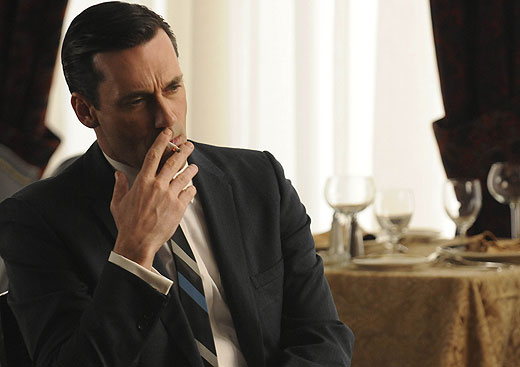
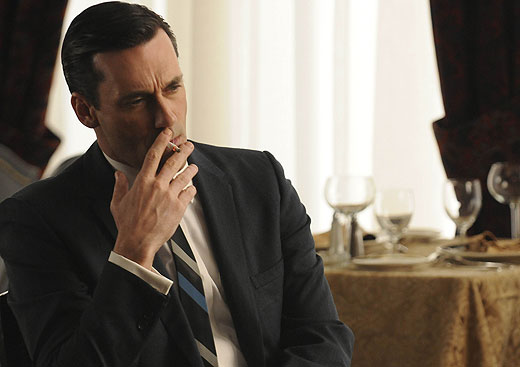
Don Draper Mad Men image

The pilot for the brilliant TV drama Mad Men shows us Don Draper, a Manhattan ad exec and dashing playboy who drinks, smokes and meets his girlfriend for a noon-time romp during his lunch break. He flirts with every woman and they flirt back, as they gossip about this legendary cocksman and brilliant cypher. The very last scene shows Don pulling up to his suburban home, walking into the house and saying goodnight…to his wife and kids.

The TV drama Sons of Anarchy is Hamlet in a biker gang. It’s all there in the pilot: the young prince Jax (son of the former head of the gang) gets a message from his dead father (in the form of a journal) that warns him about his step-father (dad’s former second-in-command turned leader, now dating Jax’s mother!) corrupting their motorcycle club. Something’s rotten in…the fictional town of Charming, California. (bad?)

If you know your Meta-Structure, you know your story and the beat sheet should be a piece of cake. That’s when you reach for your Story Map worksheet and map it out. I’ve got some great ways to train you how to use the Story Maps method to structure and write your original screenplay so feel free to Contact me asap if you’d like to book some time (and utilize the special offers below).

Good luck and Happy Writing!

Sincerely,

-Dan Calvisi
http://actfourscreenplays.com

GET META!

07.30.2010 Screenwriting Blog No Comments

Just write the BEST SCRIPT you’re capable of writing

Working, professional Reader Carson Reeves runs a site named “Script Shadow” – if you haven’t checked it out, you should do so now.

Script Shadow consistently publishes detailed reviews of spec scripts that have recently sold in Hollywood.  Carson reads and reviews the Black List finalists (in which most of the top scoring scripts have been optioned, sold and/or put into production by the time of publication) and any spec that’s hot and garnered a six to seven figure sale or a greenlight. He also runs small contests (with the prize of a published review from him, not cash, which I like) and publishes articles about what goes into a great screenplay.

I’d like to highlight a particular post from May 2010, titled “Why Bad Scripts Sell and Why It Shouldn’t Matter To You,” which has a lot to say about bad scripts but what I love the most about it are the conclusions drawn about GOOD scripts. From the article…

So now you know Hollywood’s dirty little secret. Bad scripts do sell! But here’s the thing about all of the above examples: THEY DON’T APPLY TO YOU. You don’t have agents or managers or the luxury of pitching movies over lunch to people who can actually make them. The ONLY thing you have…is your screenplay. And that’s why YOUR screenplay DOES have to be great.

read more

07.29.2010 Screenwriting Blog No Comments

A great screenplay query letter – my thoughts

I always suggest opening with a compliment — the “kill ‘em with kindness” approach — that way you don’t just sound like you want something from them but you’re here to contribute something to their obviously stellar output. Plus, everyone likes a little ego stroke, especially in Hollywood.

Open the letter by congratulating them on the success of their latest film and tell them how much you love one of their smaller, critically-acclaimed films. They will appreciate you noticing one of their lesser-known, more artistic efforts. I also suggest doing some research and pointing out an obscure fact about them and their work that could only have been known by someone who took the time to do their homework.

Of course, pointing out if you were referred to them by a friend or colleague is always a must-mention.

Get to your Logline as soon as possible, and make sure it’s only 20-30 words.

Do not waste time with personal details about yourself unless they are relevant (e.g., if you are an EMT and your script is about EMTs). Do NOT include your personal history with screenwriting. I’ve seen too many query letters and websites from screenwriters that go into detail about how they were singled out in Mrs. Beasly’s second-grade class for their excellent storytelling skills and then when they were 10 they saw Star Wars and they’ve been in love with the magic of cinema ever since, blah blah blah.

Do not list all the fascinating jobs you’ve done over the years. Saying that you’ve lived a full life by working as a shrimp boat captain, kindergarten teacher, glass-blowing apprentice and taxi cab driver just shows that you have trouble focusing on a task (and probably can’t hit deadlines). It also makes you sound like an “artiste,” which is not what they want when they’re in the business of commercial entertainment.

No one cares how you came to be a screenwriter; they just want to know why they should take the time to read your work.

Do not say anything negative or criticize current movies. Do not say how comedies today are not funny and your script will finally make audiences laugh again (I’ve seen this done many times). For all you angry writers our there who think it’s your calling to restore greatness to a genre that is obviously not up to the heights of yesteryear, you should look at the box-office to see how much other people are enjoying the current movies in that genre.

Make sure to thank them for their time and consideration and include your contact information below your signature. Don’t list a silly email or odd production company name (especially if this production company does not exist or has no feature film credits).

Finally, just sit back with a tall, cool drink and wait for the check to arrive.

Just kidding. To have that kind of confidence, you need to make sure you’ve written a great script first.

Good luck!

-Dan Calvisi
http://actfourscreenplays.com/

07.26.2010 Screenwriting Blog No Comments

Inktip Pitch Summit

Dear Screenwriters,

I have been an Inktip member for years and I recommend it to every screenwriter I meet, coach or collaborate with. I know several writers who have found success by listing their scripts on Inktip.

In fact, Inktip is the only site outside of my own that I’ve ever endorsed for the simple reason that they have an incredible track record when it comes to getting films made.

I am proud to be selected by Inktip as one of their approved Consultants for the first annual Inktip Pitch Summit.

It’s the only pitch event that I’ve ever been involved with.

It is happening on September 25 and 26, 2010 in Los Angeles, California at the Hilton Universal hotel (a stone’s throw from the famous Universal Studios theme park).

When the guys at Inktip told me that an average “Pitch Fest” gets your pitch in front of 10-12 producers and the Inktip Pitch Summit would get it to 30+ producers I was blown away! I knew that I had to check it out to see how they will pull it off (they won’t tell me their secret plan, the bastards!).

If you would like to add a Screenplay Consultation or Pitch Consultation with me on to your ticket, go to the Summit Passes & Courses Page and the “Tickets A La Cart” category and choose Script Consultation, Pitch Consultation or both. Make sure to choose me from the Script Consultant pull-down when you Checkout.

I will read your script and prepare notes for you and we will meet in-person at the event in the Hilton Universal on September 25 or 26th, 2010.

Even if you’re not hiring me for a consultation but are attending, please let me know you’ll be there and come say hi.

I hope to see you there!

Good luck and Happy Writing,

-Dan

Now, a little bit about me
and the
DISCOUNTS

I can offer
CURRENT INKTIP MEMBERS
.

The first reason I stand out from the ever-increasing pack of Script Consultants is that I have extensive experience in the movie industry as a Story Analyst with a list of past employers that includes MIRAMAX FILMS, TWENTIETH CENTURY FOX, NEW LINE CINEMA and the production company of director JONATHAN DEMME (The Silence of the Lambs, Beloved, The Manchurian Candidate).

If you are looking for someone who

combines expert analysis with incredible

credentials and experience, put

Daniel Calvisi in your

script analyst black book.”

Script Magazine.

I was an “A” List Reader. I worked for executives who developed and/or executive produced the films CHICAGO, ULEE’S GOLD, SPY KIDS, SCREAM 2 & 3, CHOCOLAT, THE GAME, VOLCANO, MIMIC, ONE FINE DAY, THE WEDDING SINGER and many others. I was given top-priority material, including the original spec draft of THE SIXTH SENSE and the source novel of THE DARK FIELDS (now a major movie starring Bradley Cooper and Robert DeNiro).

Secondly, I have been focusing on screenwriting as a career for over 14 years (as a Screenwriter, Reader, Coach and Teacher) and I have helped to guide over 450 screenwriters since 1997. As you can see from my extensive website which lists all of my credentials, services and contains many blog posts, I am serious about the craft and business of screenwriting.

  • With all that said, I always offer DISCOUNTS AND SPECIAL OFFERS to INKTIP MEMBERS!

If you can forward me one of your Inktip member emails as proof, I can extend to you one of the following offers…

$100 off an 8-Week Private Online Screenwriting Course!

$50 off my Story Maps private class!

$45 off a Full Screenplay Consultation
or
$25 off Fastback Screenplay Notes!

To make it in this incredibly competitive business, your script can’t just be good, it must be great. So let’s make your script GREAT!

Sincerely,

Daniel Calvisi

To book your Consultation or ask a question… Email or call me.

Dan photo on YouTube

Where are you at in the screenwriting process?

To book your Consultation or ask a question… Email or call me.

  • To sign up for my Screenwriting Newsletter to get bi-weekly updates on new articles, interviews, tips, discounts and special offers…use the form on the left column HERE.
07.25.2010 Screenwriting Blog No Comments

Mad Men’s Vincent Kartheiser on what he looks for in a script

After emerging from my sub-basement cryo-chamber as my alter-ego Telematic Dan, I covered the red carpet premiere of Mad Men Season 4 in Hollywood, CA at the Mann Chinese Theater 6 (in the same complex as the famous Grauman’s Chinese Theatre).

For a round-up of the night, go here.

One moment that stuck out was when I asked actor Vincent Kartheiser (who plays advertising accounts man Peter Campbell on Mad Men) about what he looks for in a screenplay… his first response was…

That’s a big question, man.


So I pressed him. How about in the first 10 pages? What do you want to see?

That’s when he gets Christian. (as Pete Campbell says)

And his answer is exactly the same as when I asked this question to a Miramax development exec years ago…

Character.


Kartheiser says it again:

Character.


Then he adds:

I want to see a story about real people.


This is a great lesson to screenwriters:

Actors are often THE factor that gets a script made into a movie. And what are actors looking for? Great characters.

So give ‘em what they want!

-Dan

CHARACTER = ACTION:

07.21.2010 Screenwriting Blog No Comments

The Harsh Truth: Cutting Scenes in your Screenplay

Dear Screenwriter,

you gotta be willing to kill your puppies.

Here’s a quick rule that is deceptively simple, very powerful and utterly crucial. This is a rule none of us can escape. This applies to every scene in your script:

If a SCENE does not:

a) Advance the story

or…

b) Reveal crucial character

then CUT IT!

Now, perhaps, and that’s a very strong perhaps, if a scene is absolutely unique in its style or use of dialogue and it beautifully communicates the controlling theme of the story, then it can stay. But the chances of that happening while not satisfying either a or b above are slim. And you better have amazing dialogue, we’re talking Tarantino or Mamet here, not just a cute regional dialect.

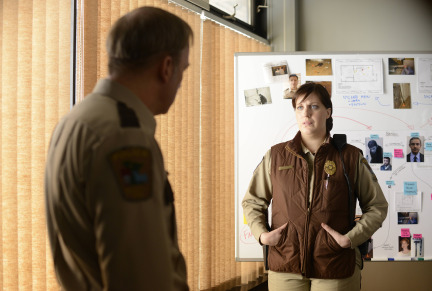
I used to think an exception was that scene in Fargo with Mike Yanagita, the Asian-American school friend of Marge. Out of the blue this strange guy calls her up and asks to meet her and catch up on old times. She meets him and he breaks down and tells her an emotional, personal story that later she learns was all a lie.

I felt that scene was so quirky and funny and entertaining that it didn’t need to be strongly plugged into the crime thriller throughline. It seemingly stood on its own and fit, purely on the basis of its entertainment value and its odd tone, which was in fitting with the established quirky tone of the film. Maybe it was to illustrate Marge’s increasing frustration with society outside the confines of her small town?

But then I saw a TV special in which Roger Ebert and Martin Scorsese pointed out that the scene actually sets up Marge’s realization that she cannot trust anyone, leading her to take action to go back and hunt for Jerry Lundegaard and his tan Cutlass Sierra.

Marge’s Midwestern hospitality and naiveté is replaced by bold action, leading her to capture a killer and solve the case. So that quirky little scene with the strange man does have an important place in Marge’s character and satisfies point A and B, above.

So, trust me, that scene of yours you know deep down has to go? Listen to your instinct. If that fails you, check it against the above criteria; if it doesn’t pass that test, then cut it. Sorry, but you gotta kill those puppies. They’re cute, they’re fuzzy, they’re your old friends. But they don’t fit.

That’s the harsh truth.

-Daniel Calvisi

Where are you at in the screenwriting process?

No matter if you’re just starting out or have written several scripts, I can help you to achieve your goals.

Good luck and happy writing!

-Dan

http://actfourscreenplays.com

07.16.2010 Screenwriting Blog No Comments

Writing Comedy – Interview with Louis C.K.

Louis C.K. in FX channel's "Louie"

Louis C.K. in "Louie" on FX

I’ve hired a lot of writers… The more original, the more unique your stuff is, the better, I think, rather than trying to hit a certain place that’s going to get you employed.  That usually just makes you like everybody else.


Continuing my coverage of FX Networks programming, I took part in a conference call interview with comedy veteran Louis C.K. who is premiering his new 30-minute comedy show “Louie” tonight.

Louis had some great insights into comedy writing and, for my money, elucidated the problem with network television and why it’s been getting its ass kicked by cable television for the past decade. Louis C.K.’s credits include Late Night with Conan O’Brien, “TV Funhouse” on Saturday Night Live, Lucky Louie on HBO and the cult hit movie Pootie Tang.

FX NETWORK:  Louie

Premieres June 24, 2010/11:00 p.m. PDT

Dan Calvisi: You are listed as the only writer on IMDB.  I don’t know if I missed some press materials where it lists other writers, but if that’s the case, what exactly is your writing process for writing these episodes?

Louis C.K. I am the only writer.  That was a decision I made because I just wanted to write and make the show.  Writers’ rooms, they kind of gravitate towards a certain place.  There’s a need to perfect things in a writers’ room, and that can take a lot of fun out of a show sometimes.  It’s a struggle.  It depends on your personality.  Some people love working with a writing staff.  I had a great writing staff on Lucky Louie, but it sometimes felt like Congress or something.  It’s like if you’re the president and you have the ability to just fire Congress, life would get kind of fun all of a sudden. read more

07.15.2010 Screenwriting Blog No Comments

Book Review: Tales from the Script: 50 Hollywood Screenwriters…

A while back, I was sent an advance copy of Tales from the Script: 50 Hollywood Screenwriters Share Their Stories and I can report that is a fantastic book that gives you the inside word from the best, most influential and most legendary screenwriters in the business. If you’re working on your first screenplay, have written 50, or you’re just a movie buff, this is an invaluable glimpse into a segment of the industry that is absolutely CRUCIAL but rarely explored in such detail.

From Mike Binder to Nora Ephron to Steven E. de Souza to John August to Paul Schrader to Mick Garris to Frank Darabont to Larry Cohen to Josh Friedman… there’s bound to be a writer in here that changed YOUR life with their words that were translated into film. So don’t just worship the actors and directors; work a little harder and learn about the scribes that the pretty people need but will never give their due credit.

I especially like the cross-section of writers and movies here; there’s a nice balance of classics and modern popcorn movies and a broad palette of filmmaking styles from the gritty populist films of the 70s up to the cgi action-fests of the 2000s.

They can’t get everyone, of course. If you’re a serious screenwriter and fan of screenwriting, there will invariably be a few screenwriters that YOU would have loved to have seen interviewed but are absent. But, even though I’m tired of hearing ol’ windbag William Goldman chatter on about the same movies he’s detailed in several books, I have to admit that he is the original “rock star” screenwriter. And talking about rock star screenwriters (an oxymoron in 99.9% of the screenwriting population, let me assure you!) it’s pretty much REQUIRED that you interview Shane Black.

It’s amazing to me that it’s been over 23 years since “Lethal Weapon” but he’s still SHANE, the legend (and this is primarily for his huge paychecks, but you don’t get that kind of money in Hollywood without having a powerful, unique voice). And having met him in person at the Austin Screenwriters’ Conference, I must say that he’s great at offering his wit and wisdom to up and coming writers. Like Black, the other writers are articulate, honest and entertaining in their stories from the trenches. The editors have gathered a fantastic group.

The only HUGE name screenwriter that’s notably absent is Joe Eszterhas, but if you want his irreverent take on things, check out his book “The Devil’s Guide to Hollywood: The Screenwriter as God!” (yes, that’s actually the title)

Buy Tales From the Script from Amazon!

Where are you at in the screenwriting process?

No matter if you’re just starting out or have written several scripts, I can help you achieve your goals.

Good luck and happy writing!

Dan Calvisi

07.14.2010 Screenwriting Blog 1 Comment

Inception featurette continues the legacy of The Dark Knight – WATCH IT!

Can you press 3rd floor for me-aaaahhhhhh!

There’s a reason why that anti-gravity hallway effect in Inception looks so amazing.

It’s because that shit is real.

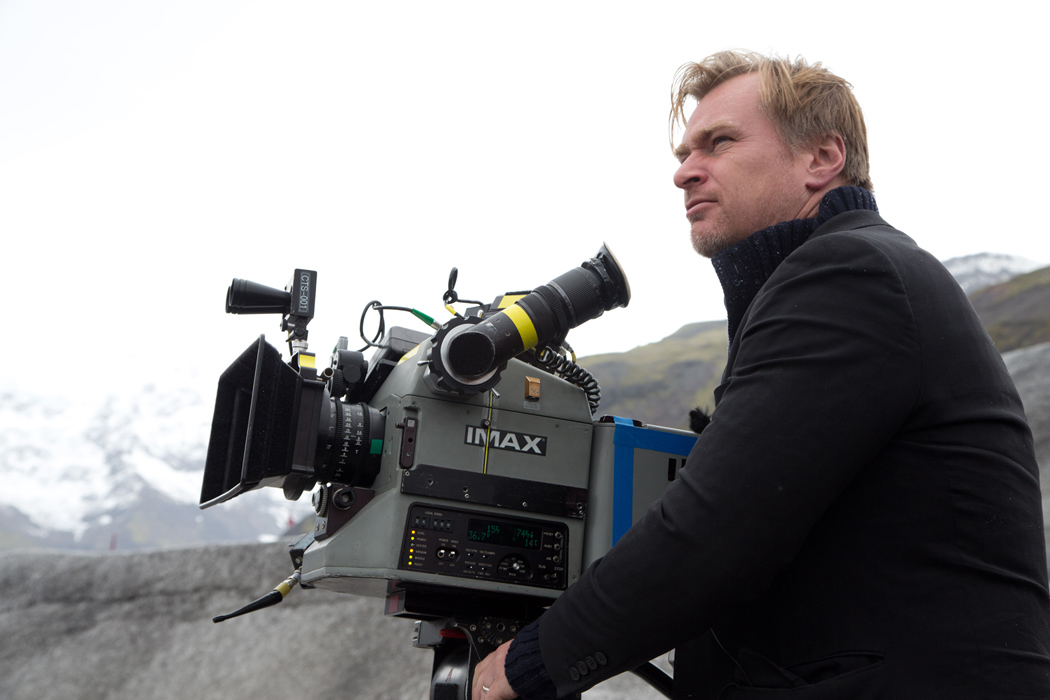
No CGI. It’s a giant rig that rotates 360 degrees and it must have cost a fortune. It’s another example of how and why Christopher Nolan is this generation’s James Cameron.

Like Cameron, Nolan insists on spending millions of the studio’s money on creating real, physical spectacles, sometimes for only a single shot.

This is why those aerial IMAX shots in The Dark Knight looked so amazing; those weren’t sets, they were real skyscrapers in Chicago and Hong Kong.

When we see Batman riding his batpod motorcycle…it’s real. They didn’t just hand off the scene to a bunch of animators.

batpod pic

A team of engineers spent months (and a batload of Warner Brothers’ cash) designing and building a new vehicle that a stuntman could actually drive.


Don't try this at home.

Let’s be clear: they invented a vehicle.  For..one scene?  Yes, for one scene (okay, two and a half scenes, geeks).

read more

07.13.2010 Screenwriting Blog No Comments

The A-Team: please don’t call them if you’re in trouble

Because this A-Team does not help people in trouble.  They’re only out for revenge.

This A-Team did not serve time in the same military unit and then escape from a prison camp, thus bonding them together for life. In fact…

The B-team.

This A-Team doesn’t make any sense, whatsoever.

And it just got pitied like a fool by The Karate Kid, which made DOUBLE its gross in their mutual opening weekend.

At this time last year, “The Hangover” and “Up” were going gangbusters at the box-office — both ORIGINAL scripts.


But, wait, The Karate Kid is also a remake of a piece of campy 80s material. So why did it fare so much better?

read more

06.19.2010 How To Screenplay, Screenwriting Blog No Comments

Screenplay Structure

Would you like to learn how to write a screenplay from a professional screenwriter and Script Doctor who has worked for major movie studios and is based in Los Angeles, California, Hollywood, the entertainment capital of the world?

I can give you the TOOLS — the professional screenwriting how to — to write a great movie screenplay or television script. My method is called Story Maps Screenwriting and it is the most simple, clear and effective roadmap to take you from your initial concept all the way to a polished draft that you can submit to agents, managers and producers in the movie industry in Hollywood. read more