AI Script Coverage: is it worth it? by Daniel Calvisi @storymapsdan

We were warned.
“Your scientists were so preoccupied with whether or not they could, they didn’t stop to think if they should.”
-Jeff Goldblum, sexy dino scientist
As a writing coach and a former industry reader, people have been asking me for my thoughts on AI script coverage. When I first learned that writers were turning to AI to analyze their work, I couldn’t believe it. It seemed insane to me. Honestly, it still does. I still can’t help but ask “If you wouldn’t let AI WRITE your screenplay, why would you trust it to EVALUATE your screenplay?”
But I know people are doing it, and I can’t stop them. As I don’t like to talk about things that I haven’t tried, I decided to give it a whirl with some test screenplays. I ended up feeding several different scripts into Google Gemini using my own prompt based on the coverage reports that I used to write for studios. More on the results of my test runs with four sample scripts later.
First, I’ll give you my general takeaways from my experiments with AI “coverage” reports…
- It’s way too nice. Gemini must really want us to like them, because they seemed to heap a lot of praise on every script I fed in. Even the beginner script.
- It doesn’t understand TV structure. The Breaking Bad pilot coverage praised how “the script flawlessly executes a three-act structure.” The only problem is, Vince Gilligan’s Breaking Bad pilot was written in a Teaser + 4 acts structure, NOT a three-act structure. (Note: My book Story Maps: TV Drama also offers a Teaser + 5 breakdown of the Breaking Bad pilot) Bottom line, neither one-hour nor half-hour pilots use a three-act structure. I don’t think Mr. Google Gemini knows that.
- It demands 100% clarity! Forget nuance or subtext or calculated ambiguity, it’s obsessed with EVERYTHING being explained. (See Weapons section below)
- It doesn’t have a sense of humor. Comedy is subjective, but a good reader should be able to recognize if they’re not the target audience of a comedy and express this to the writer. I’ve definitely given notes like “I personally didn’t find this very funny, but then I’m not the audience. This seems to be written for teens, so I suggest you run it by them and see how they react.” AI doesn’t seem to “get” nuances in tone or how comedy can hit different for different generations.
- It struggles to offer actionable suggestions for fixing issues. The AI will say something like “Strengthen Paul’s internal conflict and vulnerability.” Okay, so how do you do that, exactly?
- A positive: it does a decent job of generating a synopsis and logline. But if you do this, make sure to PROOF it before you send to anyone! There may be some serious errors in there. (Also, be aware that you’re taking the risk of uploading your work into “the machine.” More on my feelings about that, below.)
- It doesn’t understand the market or the arc of a writer’s career. This was a huge problem for me. More on this later.
One thing to note. If you are going to try it, do NOT pay for it. You can do it for free in any number of apps. Don’t give your hard-earned money to someone who spends two minutes feeding your script into an AI reader and sends you back a report that could potentially contain several errors or AI “hallucinations.” Whoever runs these services can’t even proof your coverage for errors before they send it to you because they haven’t actually read your script! That also means you can’t ask any follow-up questions. That seems like a waste of money to me.
Let’s move on to some specific case studies.
TWO GREAT SCREENPLAYS: “BREAKING BAD” AND “AMERICAN FICTION”
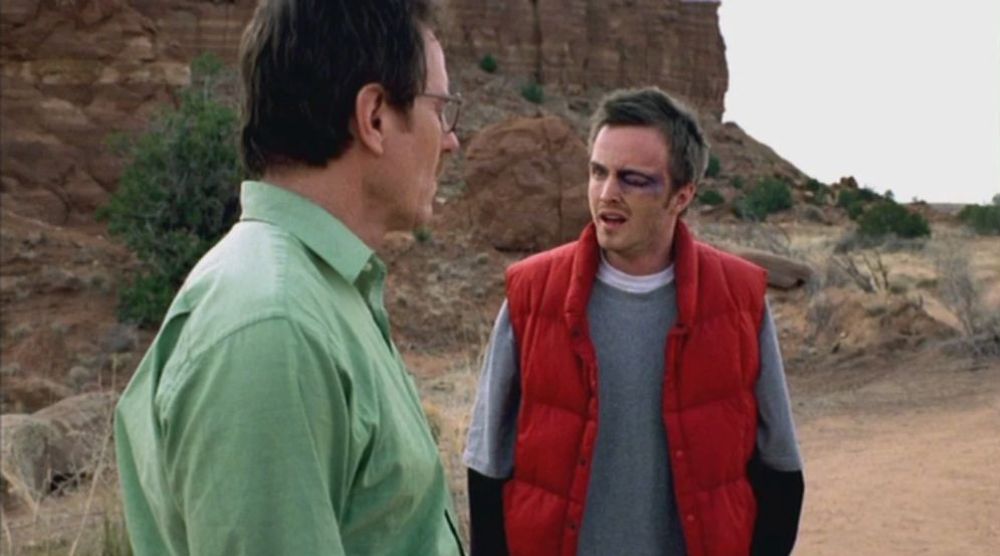
I decided to begin with two of my favorite screenplays from the past twenty years, Breaking Bad and American Fiction. I’m sure many of you have read the Breaking Bad pilot by Vince Gilligan and seen story analysts like me break it down and hold it up as a benchmark of great writing for television, but maybe you haven’t read Cord Jefferson’s feature screenplay American Fiction, which took home the Oscar for Best Adapted Screenplay in 2024. I recommend you read both.
When I fed them into Gemini and asked for coverage, I wasn’t surprised to see the AI came back glowing with praise for both scripts, citing strong concepts, dynamic characters and timely themes. All good. But it ALSO noted that both projects had huge potential for commercial and awards success. This became my first big red flag with Gemini’s AI coverage, and I’ll tell you why.
If you are going to try it, do NOT pay for it.
As we know, Breaking Bad eventually found big success, but it had a heck of a time finding a network to even greenlight it. Vince Gilligan, a very experienced writer/producer in TV who had even co-created a show before, got rejected by several networks (He’s famously said his pitch meeting with HBO was “the worst meeting I’ve ever had”) before he finally found a home at AMC, a fledgling cable network that was putting its first toe into the narrative waters, and was willing to take a risk on unique projects. In that particular market at the time, the show was seen as either a risk for its subject matter or too similar to other shows because of its male antihero, and he struggled to sell it. In fact, the show didn’t really become a phenomenon until later seasons, after its back catalog found a wide audience on Netflix. AMC had it on the chopping block more than once.
Could Vince Gilligan have built more interest if he had gone into his pitch meetings with his AI Coverage report in hand, spouting “Don’t you see? The computer says this will be a hit and win lots of awards?” Alas, we shall never know. But that’s not the point. Point being, it’s not just about your great idea, it’s also about timing and the industry, and how you and your script can fit into it and how best to strategize your career to get yourself in front of real decision-makers. At this point, you still need a person who not only knows the craft, but also knows the current state of the industry and can look at your screenplay, consider your experience, and give you unbiased advice on how to position your material and yourself, going forward. I always try to do this, taking the material and the writer into account, before giving them my honest, direct opinion. This is a very tough business and I’m not going to sugarcoat it. I’ve actually lost clients because I was “too honest.” You don’t need to pay someone to give you this insight, it can come from a knowledgeable friend who sees the big picture, but not (as yet) from a computer, in my humble opinion.
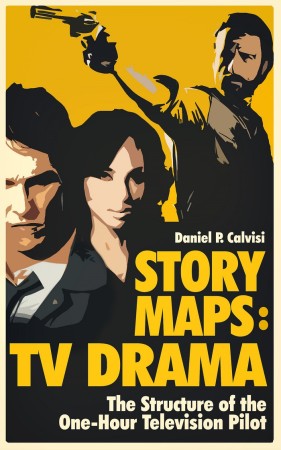
Another observation, file it under “How can I trust it?” When breaking down the characters in Gemini’s coverage of everyone’s favorite tale of a high school chemistry teacher turned drug lord, I noticed how it praised a key supporting character with this comment “Jesse (Dupree) is immediately charismatic.” “Dupree” was the original name for the character who went on to be named Jesse Pinkman, after the pilot was written. The name “Jesse” never appears in the document I uploaded into Gemini, which means it accessed some other well of information on Breaking Bad rather than just sticking to the script. What if it pulled a lot of the text in its coverage, the actual evaluation, from other sources?
This makes me wonder if it will do the same with your script? Let’s say you wrote a pilot about a group of strangers stranded on a remote island. How do you know it’s not going to lift language from one of the thousands of articles written about Lost?
Subscribe to the Story Maps Newsletter for more
about the impact of AI on screenwriting
You also don’t know if these AI services are saving your material in their database, only to regurgitate it later for some other user halfway across the globe. In fact, if you can find it in your Settings, there is a box you must uncheck to have Google not save your documents (saving is the default). Is it possible they’re saving these documents even when you tell it not to? Call me cynical, but I’m pretty sure giant tech firms have been caught scraping proprietary material before and lying about it (this is sarcasm. Of course they have, many times.). I say this as an author who has had four of my e-books stolen by one of these conglomerates without permission. I’ve supposedly been added to a massive class action against them, along with millions of other authors. I trust the tech bros about as far as I can throw ‘em.
Okay, rant over, let’s get back on track.

Remember how the AI also heaped praise on the writing in American Fiction? That was well deserved, but it also said it had huge potential as a hit movie with a broad audience. But American Fiction only grossed $22.5 million…worldwide. Which is not to say it’s not a great film, it’s fantastic and deserved the awards accolades it received, and I hope it’s doing well in after markets. But I guarantee that none of the original producers on the film had any illusions of their film becoming a box-office juggernaut, so they wisely catered their commercial strategy in a different direction, and it paid off. Applying that to you, if you were a new writer submitting that screenplay to veteran producers, and you only had your AI coverage to go on, you’d be quite shocked when they informed you this was a niche film for a platform theatrical release aimed at awards recognition, not a blockbuster-in-waiting. In short, you have to know which lanes are available to you and which ones to choose. When you’re making up your hit list of producers and reps, you generally want to cater to those with a track record of working with material like yours. Even that’s not a foolproof strategy—a manager who already has a couple of YA television writers may not want to sign you based on your award-winning YA pilot because you’d be competing with their existing clients. AI is not going to be able to help you pivot your marketing strategy when you need to.
I submitted the same script more than once into Gemini and the coverage reports always differed.
Now, how about if you DID intend for your script to become a big popcorn blockbuster and you were looking for some honest feeback from AI coverage? My next case study simulated just that situation.

THE NEWBIE SCREENPLAY: “UNTITLED SCI-FI ADVENTURE”
A friend of a friend wrote an original, big-budget sci-fi comedy with an 80s sensibility that was also a satire on religion. It was his first script, and honestly, it showed. It was extremely rough, from the clunky formatting and confusing flow to the many overwritten scenes filled with walls of description, wooden dialogue and corny jokes. That may sound harsh, but trust me, I don’t say that with judgment! For the record, no one’s first script is good, not even the first efforts of Vince Gilligan, Cord Jefferson or Aaron Sorkin. I applaud anyone who finishes a screenplay—you should feel good about that achievement. However, 99% of the time, a first script is a learning tool, not your big breakthrough piece of material. And that’s perfectly okay. But newbies usually need this to be explained to them and the best way to do that is to show them using lots of specific examples from their screenplay during a positive yet honest conversation. Hopefully, they roll with the punches and then choose to develop some new material, knowing that next time their concept will be stronger, the execution tighter, and, ideally, the project will be more clearly catered to a commercially proven genre and audience. Or, they make a crucial creative change to the screenplay that may put it on the right track. Oftentimes, these inspirations only come from a dialogue with another person. Story development is actually akin to therapy – the more you talk about it, and the more open you are to making changes, the better prepared to face the world it will be.
In short, getting an opinion on your screenplay is not always only about polishing that incarnation of the material. You’re going to be selling your script and yourself, and you need good craft and career advice that’s catered to you, not only the anonymous writer that AI knows you to be. Your story may even be better served in another medium, like a novel, but this type of realization only comes from in-depth dialogue with other people who are willing to ask you questions that force you to plumb the depths of your creativity.
I’m not saying that a coverage report was ever meant to give targeted career advice, and Gemini is failing on that front. Coverage, itself, was originally used as a quick, practical tool by studios to filter the thousands of incoming script submissions, and the writer was never meant to see the evaluation. Its purpose was not to help a writer, it was to help a company to operate more efficiently. It’s only in the modern era that writers began to pay for “coverage” and get to see the report. As a former Story Analyst who used to write coverage for major studios and production companies, this is why I’ve always had a problem with writers paying for short coverage-style reports and I never offered it as a service. My notes and follow-up are always going to be more in-depth, which is what a current screenwriter needs to come up with an actionable strategy for their craft and career.
Story development is actually akin to therapy – the more you talk about it, and the more open you are to making changes, the better prepared to face the world it will be.
Back to our Untitled Sci-Fi Adventure screenplay. Remember when I described this newbie script as a big-budget sci-fi comedy with an 80s sensibility that was also a satire on religion? Did I also mention it was not based on any known IP and the writer has no contacts in the biz? I think you can see where I’m going with this. Pretty much anyone in the know would tell this writer that this was a bad bet for a screenplay that could potentially get optioned, bought or produced in the current market. They just don’t make these types of movies from new writers, even rarely from established writers (quick: what was the last non-IP sci-fi film made on a medium to large budget, and how did it perform?) and unless it’s an AMAZING read, it may not even be useful as a writing sample. This writer should be told to set this spec aside and get to work on something more realistic.
But that kind of “tough love” won’t come from Gemini.
Gemini said “This screenplay’s blend of sci-fi, romance, and comedy is a proven formula, and the unique premise sets it apart. This movie is best positioned for a theatrical release. Its high-concept premise, spectacular visual effects, and broad appeal would make it a strong contender for a wide audience. It could also find success as a flagship title on a major streaming service.” That’s just insane.
The coverage ended by listing four “comp” films, Sci-Fi movies with wildly disparate tones that came out in 1976, 1984, 1997, and 2011. Not exactly fresh brands.
AI does not know if something is unconventional in a good way, it just knows if something strays from a formula it’s compiled by scanning its massive database of existing material.
If this writer only had this AI coverage report to go on, they would possibly spend years trying to polish this doomed screenplay. They would not move on to new material that would have a better chance in the marketplace and as a writing sample, and they would not grow as a writer.
Let’s turn to a film that has been a critical and commercial hit that began with a much buzzed-about screenplay (albeit from a hot director, but I think this script would have made waves even without his pedigree).
A CURRENT HIT FILM: “WEAPONS”
The Weapons screenplay by Zach Cregger fared well in its AI script coverage. It was praised for many things, like its concept, dual protagonists, and especially the uniqueness of the “parasitic entity” that drove the mystery. [SPOILERS AHEAD.] The problem is that Gemini’s coverage kept discussing this entity as if it were a separate force that was summoned by the villain Aunt Gladys and was spreading like a virus throughout town. That’s just not how it worked in the story.
Interestingly, in the “box score,” which scores the major elements (Concept, Characters, Structure, Dialogue, Genre, etc.) Structure was given the lowest score of all the major elements, which surprised me as I thought the structure stood out as the most impressive thing about the screenplay. To each his/its own, I suppose, but it’s worth noting that the most pronounced way in which this script differed with other popular horror films of this era, a non-linear character-based structure that felt more like Pulp Fiction than It, was flagged by Gemini as an issue. I think because AI does not know if something is unconventional in a good way, it just knows if something strays from a formula it’s compiled by scanning its massive database of existing material.
The AI also asked for clarity as to Gladys’ backstory and how her magic stick worked. But it didn’t bother me that her origin wasn’t fully explained. I think that ambiguity just made the story even scarier. It also suggested showing a scene of young Alex practicing with the magic stick so it was more realistic when he uses it against Gladys in the climax. But that would have ruined the entire surprise when Alex becomes a bad-ass and ends Gladys’ reign of terror!
Admittedly, a human reader may have also read Weapons and made these same “errors,” but with a person, at least you have options for follow-up. Perhaps in doing these tests, I’m giving you a greater sense of what might go wrong when it’s AI doing your read and evaluation. I think the inherent value in getting coverage on your script has always seemed like it’s an opportunity to try to simulate the reader experience. I.e., giving my script to this stranger now and seeing their report might just give me a sense of what a cold reader in the industry might think. I can see that logic, I suppose, but if you’re submitting to AI then you’re not simulating the experience of an actual person at an agency/production company/studio/streamer reading your work.
One more thought. I’ve heard rumblings about AI being used as a first reader at contests and in the industry. I can’t verify that, in fact I’d guess in many instances these rumors are created by writers looking for a reason why their script didn’t advance. Whatever the case, I can see how you may think that you should feed your script into AI before you submit it somewhere that is just going to use AI to screen your script. To see if you can “beat the AI” before they beat you. I disagree with that notion because I submitted some of these scripts more than once into Gemini and the coverage reports differed in many ways. For example, I ran coverage on the same Weapons screenplay twice — first, before the film opened, and then again after it opened. The coverage reports had similarities, but there were a lot of differences, in both praise and criticism. Same exact script, why not the same report?
Does Gemini have moods, depending on the day?
Wait, maybe it is human and we are the simulation! Didn’t Black Mirror warn us about this, or was it Dr. Ian Malcolm?
Just remember, there’s still nothing wrong with a pencil and paper. There’s probably an AI app that can convert it into typewritten text for you, just don’t ask for its opinion on your writing. 😊
Deleting my cookies,
Dan
About Me
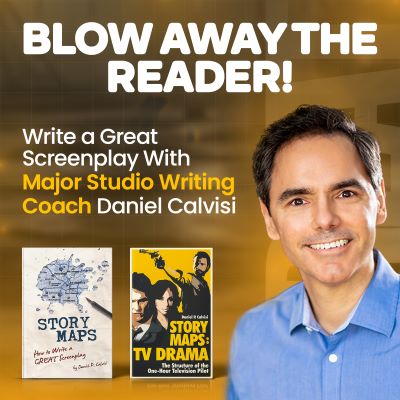
p.s. If you’d like to talk about how I might help you write a great screenplay and position it as best you can, shoot me an email from any of the contact forms on this site and we’ll set up a free half-hour consultation call.

Leave a Reply
Want to join the discussion?Feel free to contribute!